



In commercial lending, speed matters. Faster deal turnaround times help lenders win more business, keep borrowers engaged, and maintain a competitive edge in a crowded market.
But when deals slow down, many teams assume the delay happens during underwriting or credit approval. In reality, the slowdown often starts much earlier — at the moment business financials are first received, reviewed, and prepared for analysis.
Income statements and balance sheets arrive in different formats, naming conventions, and reporting periods. Before underwriting even begins, credit teams spend hours extracting, validating, reorganizing, and categorizing this data just to make it usable for decision-making.
This blog explores where deal turnaround delays actually begin, how business financial handling impacts speed across the lending lifecycle, and what lenders can do to reduce friction without sacrificing accuracy or compliance.
Key Insights at a Glance
- Most deal delays start before underwriting, during intake and preparation of business financials
- Inconsistent document formats increase review time and rework
- Manual data extraction and categorization create hidden bottlenecks
- Standardized financial structure speeds underwriting and approval decisions
- Faster financial preparation improves borrower experience and conversion rates
- Clean, structured data supports both speed and accuracy in credit decisions
Where Lending Delays Really Begin
When a borrower submits financials, the expectation is that underwriting can begin quickly. In practice, however, there is often a significant delay between document receipt and credit analysis.
This delay happens during what many lenders consider a “pre-underwriting” phase, where business financials are:
- Extracted from PDFs or spreadsheets
- Validated for accuracy and completeness
- Reorganized into a consistent format
- Categorized for analysis and reporting
Because business financials are not standardized, each file requires manual interpretation. Line item names vary, totals may not align cleanly, and reporting periods may differ across documents.
These inconsistencies create a ripple effect:
- Analysts spend hours cleaning data instead of evaluating risk
- Underwriters wait for complete, usable spreads
- Borrowers experience delays and repeated document requests
What appears to be an underwriting delay is often actually a data preparation bottleneck.
The Hidden Bottlenecks in Business Financial Review
Several common friction points consistently slow down deal turnaround time.
1. Document Format Variability
Income statements and balance sheets come from different accounting systems, advisors, and reporting practices. Line item labels, grouping structures, and layouts vary significantly.
Each variation requires manual review and interpretation before data can be used.
2. Manual Data Extraction
Many lenders still rely on manual rekeying of financial data from PDFs or spreadsheets into LOS systems or templates.
This process is:
- Time-consuming
- Prone to transcription errors
- Difficult to scale as deal volume increases
3. Categorization and Mapping
Even after extraction, line items must be mapped into standardized categories such as revenue, COGS, SG&A, current assets, or long-term liabilities.
Without consistent categorization:
- Ratios cannot be compared across borrowers
- Trend analysis becomes unreliable
- Credit decisions take longer
4. Multi-Period and Multi-Entity Complexity
Business financials may include multiple reporting periods or multiple related entities.
Without a structured approach:
- Periods may be misaligned
- Entities may be reviewed inconsistently
- Data must be reworked before analysis can begin
5. Rework and Versioning
If inconsistencies are found later in the process, files must be re-reviewed, corrected, and redistributed, adding additional delays and increasing frustration for both internal teams and borrowers.
Why Speed Matters More Than Ever
Deal turnaround time is not just an operational metric — it directly impacts business outcomes.
Faster turnaround:
Subscribe to BeSmartee 's Digital Mortgage Blog to receive:
- Mortgage Industry Insights
- Security & Compliance Updates
- Q&A's Featuring Mortgage & Technology Experts
- Improves borrower experience
- Increases application-to-close conversion rates
- Helps lenders win deals in competitive markets
- Reduces pipeline bottlenecks
Slower turnaround, on the other hand:
- Leads to borrower drop-off
- Increases operational costs
- Limits deal volume per analyst
- Creates internal inefficiencies
In today’s lending environment, speed is a competitive advantage, but it cannot come at the expense of accuracy.
The Connection Between Financial Structure and Speed
The fastest lending teams aren’t cutting corners. They are working from clean, structured, and consistent business financial data.
When business financials are standardized early in the process:
- Underwriters can begin analysis immediately
- Ratios and trends can be calculated quickly
- Fewer clarification requests are needed
- Credit decisions can move forward faster
Structure reduces friction. It ensures that every team, from intake to underwriting to credit committee, is working from the same reliable foundation.

Q&A: Deal Turnaround and Business Financials
Q: Why does it take so long to start underwriting after documents are submitted?
A: Because financials often need to be extracted, validated, and standardized before they can be analyzed. This preparation phase can take longer than underwriting itself.
Q: Can faster intake processes compromise credit quality?
A: Not when done correctly. Structured, validated financial data actually improves decision accuracy by reducing errors and inconsistencies.
Q: What’s the biggest driver of turnaround delays?
A: Manual data handling, especially rekeying and categorization, is one of the most time-consuming parts of the lending workflow.
Supporting Faster Turnaround With Better Financial Data Workflows
Improving deal speed doesn’t require sacrificing diligence. It requires improving how financial data enters and moves through the credit process.
For many lenders, the biggest opportunity to reduce turnaround time sits in the way business financials are extracted, validated, and structured before underwriting begins. When that work is manual, delays are almost inevitable. When it’s standardized and supported by automation, the entire workflow moves faster.
FlashSpread is designed to support this shift.
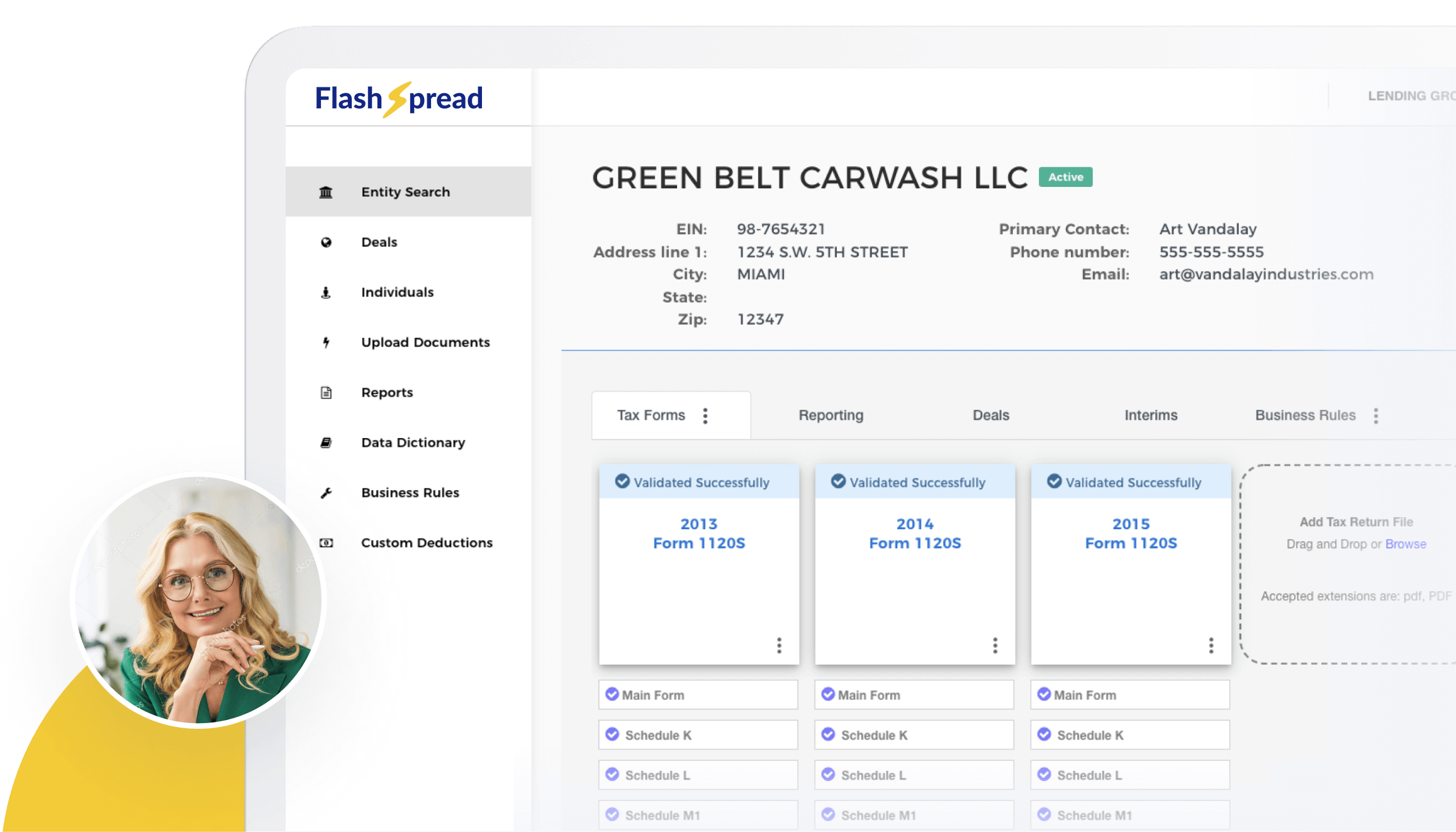
Using advanced OCR and machine learning, FlashSpread extracts and organizes data from income statements, balance sheets, and tax returns, transforming unstructured borrower documents into structured, analysis-ready financial data. Instead of relying on manual rekeying and reformatting, credit teams start with clean, consistent spreads that are ready for review.
In practice, this helps lenders:
- Reduce hours spent on manual data entry and reconciliation
- Improve consistency across borrowers, entities, and reporting periods
- Surface missing or inconsistent data earlier in the process
- Enable underwriters to begin analysis sooner
- Support higher deal volumes without adding headcount
As teams review and categorize line items, FlashSpread’s machine learning capabilities learn common categorization patterns over time, helping streamline future document reviews and reduce repetitive work.
The goal isn’t to replace credit judgment. It’s to ensure that analysts and underwriters can focus on evaluating risk and making decisions, rather than spending valuable time preparing data for analysis.
Roundup
Deal turnaround time in commercial lending doesn’t begin with underwriting. It begins with how business financials are handled at intake.
When financial data is inconsistent, unstructured, or manually processed, delays ripple through every stage of the lending process. Underwriters wait, analysts rework files, and borrowers lose confidence.
But when business financials are structured early, validated consistently, and prepared efficiently, the entire lending workflow moves faster and more smoothly.
Faster turnaround isn’t about rushing decisions. It’s about removing friction so credit teams can focus on what matters most: evaluating risk, serving borrowers, and closing more deals with confidence.
If your team is struggling with slow deal cycles, start by reviewing how business financials are prepared. Explore how FlashSpread helps lenders streamline business financials preparation and move from documents to decisions faster.